by
On August 31, 1962, eighteen people climbed onto a bus in Ruleville, Mississippi, and rode 26 miles to the Indianola courthouse to try to register to vote. None of them were registered that day. On the ride home, with fear thick on that bus, a forty-four-year-old plantation timekeeper named Fannie Lou Hamer started to sing. (Mississippi Department of Archives and History)
I keep thinking about that bus.
Not the courthouse. The bus.
Who I Am
I’m a Carolina preacher, an ordained elder in the African Methodist Episcopal Zion Church, the denomination still called the Freedom Church because Harriet Tubman, Sojourner Truth, and Frederick Douglass are part of our story. I’m a womanist theologian. I’m a mother of three grown sons and a grandmother.
My work lives where faith, community development, and democracy meet. I serve as National Director of Religious Affairs at Repairers of the Breach, Program Manager for the Flourishing Congregations Initiative at Varick Community Development Corporation, and Executive Director of Project 100, a civic engagement initiative of the AME Zion Church.
Some days that means writing a prayer. Some days it means cleaning up a contact list at midnight. Most days, honestly, it’s both.
What Is Stirring in Me
Most of us in Christian community development can recite Jeremiah 29:7 in our sleep: seek the shalom of the city where God has sent you, because in its shalom you will find your own. So, we plant gardens. We rehab houses. We sit on porches and learn names.
But I’ve come to believe we cannot seek a city’s shalom while handing its ballot box to someone else.
In my own theology, I talk about three reconciliations. Salvific reconciliation, with God. Social reconciliation, with one another. And civic reconciliation, between who a democracy says it is and who it actually makes room for. Reconciliation, the way I mean it, is not about restoring nice feelings. It is about resolving the conflict.
And conflict is what too many of our neighbors meet when they try to vote. Rules that change from one election to the next. Polling hours that don’t fit a second-shift schedule. The quiet sense that the process was never built with them in mind.
What I Am Working On
- Walking to the polls together. Through 1,000 Marches to the Polls, a nonpartisan, nonviolent effort of Repairers of the Breach, congregations and neighbors commit to walk to vote as a community. A march can start with five to ten people. We do not tell anyone how to vote. We make sure everyone can.
- Equipping a denomination. Through Project 100, I’m helping AME Zion congregations treat voter engagement as ministry, not a once-every-four-years announcement from the pulpit.
- Building what comes after. In the Flourishing Congregations Initiative, I coach a cohort of 22 North Carolina AME Zion churches as they design community development proposals for their neighborhoods.
Here is the thread I want CCDA to hear. The church that walks to the polls on Tuesday is the same church drafting a plan for its block on Wednesday. Civic engagement and community development are not two ministries. They are one body.
What I See Among the People
Weariness. I won’t dress it up.
The folks I serve alongside are tired. Tired of being courted for their vote and forgotten until the next cycle. Tired of rules that change faster than the church bulletin can announce them.
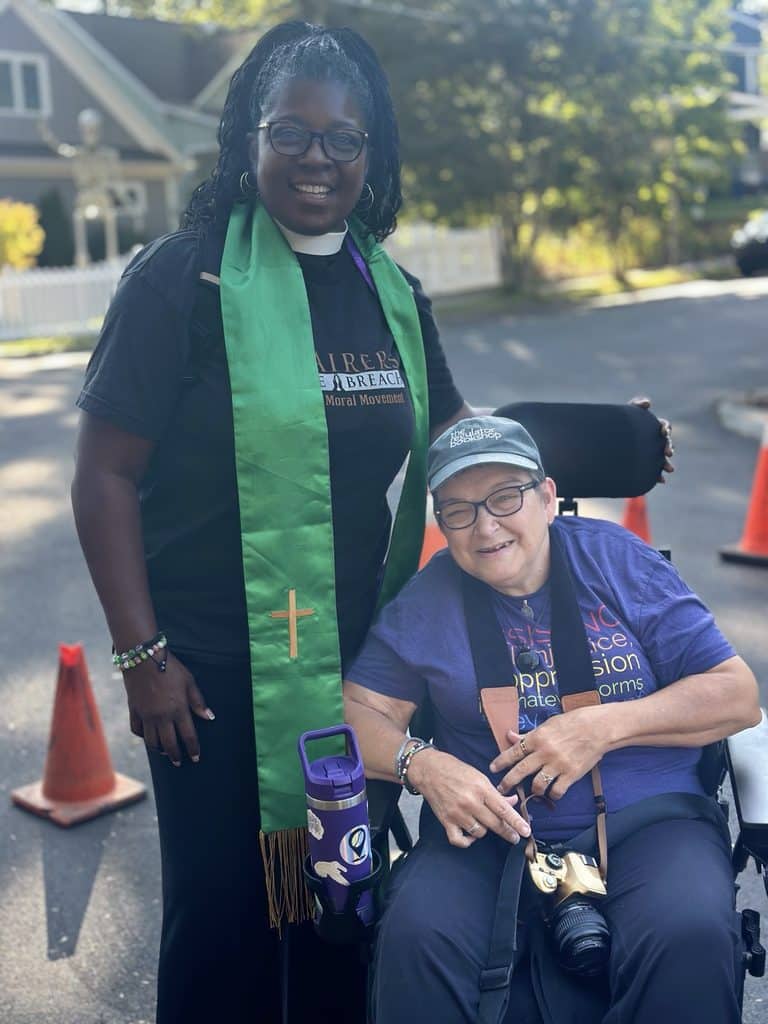
Photo credit: Rev. Steve Swayne.
Then I remember walking to the polls in Durham on the first day of early voting alongside neighbors with disabilities. One sister rolled the whole route in her power chair with a camera strapped across her chest, recording the witness while she was part of it. Nobody in that group asked whether the walk was worth it. They had counted the cost long before we stepped off: the missing curb cuts, the extra time, the energy it takes to get somewhere this country never designed with them in mind. They came anyway. They set the pace, and the rest of us learned to keep it.
That is steadfastness. Not the absence of weariness. Weariness that keeps showing up.
But weariness is not apathy. Weariness is what love feels like after carrying something heavy for too long.
Where I See God Showing Up
On the bus.
God keeps showing up in small company, not in a forecast of results. Five people at a church door on a Tuesday morning deciding to walk together. Neighbors with disabilities who set the pace so no one gets left behind. In the deacon who brings folding chairs for the line. The young man who voted for the first time because someone he trusts asked him directly.
Fannie Lou Hamer’s journey began at a mass meeting at Williams Chapel in Ruleville. She did not get registered on that first trip. She lost her job for trying. She went back to that courthouse anyway, and in December 1962 she was registered. (MDAH)
So I ask myself, and I ask you:
What if the line is long?
What if the rules changed again?
What if nobody on the ballot says our neighborhood’s name?
What if we’re tired?
Then God is already on the bus.
What I Am Calling the Association To
Three practices, simple enough to start this week and lasting enough to keep after the results come in:
- Make voting a community practice, not a private errand. Walk together. Carpool together. Bring water and chairs to the line. Stay nonpartisan: we don’t tell people how to vote. We make sure they can.
- Count the day after. On Wednesday, ask: who in our neighborhood could not vote, and why? You already know how to do a community assessment. Do one on democracy.
- Put civic life in your development plan. If your ministry has a plan for housing, health, or jobs, give civic participation its own line, with a named person responsible and a date attached.
Election Day is one day. Repairing the breach (Isaiah 58:12) is a lifetime of work.
Closing Prayer
God who sees, You saw Hagar in the wilderness, and You see every neighbor standing in line today.
Give courage to the afraid and rest to the weary. Give poll workers clear minds and kind hands. Give us churches with folding chairs and open doors.
Where the breach is wide, make us repairers. Where the road is long, make us company. And when the results come in, whatever they are, keep us on the bus, singing, until everybody gets to the courthouse.
Amen.
About Rev. Dr. Hanna R. Broome
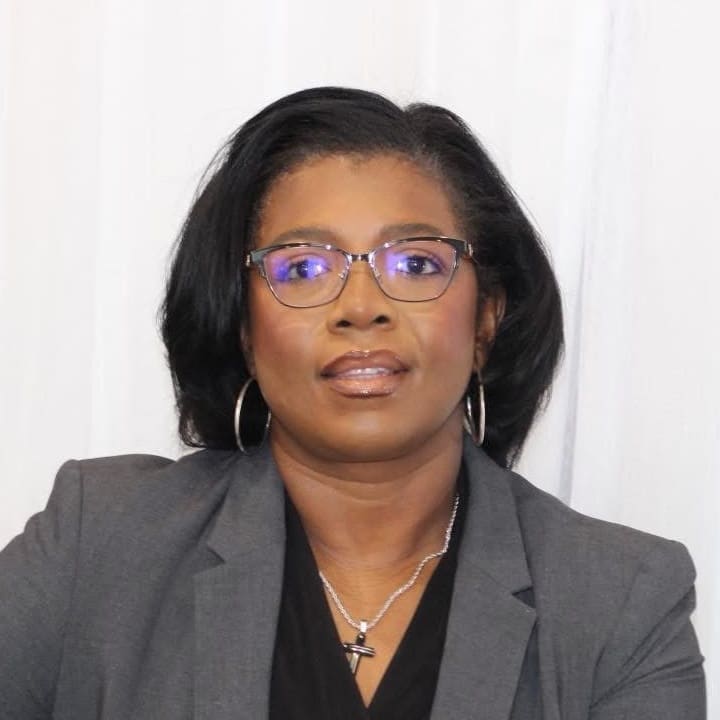
Rev. Dr. Hanna R. Broome is an ordained elder in the AME Zion Church, a womanist theologian, and a faith-rooted organizer. She serves as National Director of Religious Affairs at Repairers of the Breach, Program Manager for the Flourishing Congregations Initiative at Varick Community Development Corporation, and Executive Director of Project 100. A past president of the North Carolina Council of Churches, she writes the Altar & Alley Substack.