by
by How do you rest from your work and worship God?
A half mile from my house on the east side of Cleveland, OH, sits a Benedictine monastery called St. Andrew Abbey. It is the oldest religious institution in the Buckeye-Woodhill neighborhood. My community has a history of white flight from the 1950s through the 1980s, and churches were not immune from the seemingly implacable urge to leave Buckeye-Woodhill for greener, and perhaps “safer”, suburban pastures. Many churches packed up and left, and the landscape is filled with either repurposed or abandoned churches from a bygone era. But, despite these forces, St. Andrew Abbey stayed in the neighborhood. About two years ago, I was on a prayer walk in our community and discovered this monastery tucked away at the corner of Buckeye Road and Martin Luther King Jr Boulevard.
Why bring up a monastery, of all places, for those of us in CCDA to consider?
Because of the bells.
Ever since I “discovered” the existence of the Abbey, a mere half mile from my house, tucked away in our neighborhood, I’ve realized that I can hear the bells of the Abbey as they call the monks to prayer and worship four times a day. Those bells ring at 6 AM, Noon, 5 PM, and 7:30 PM. Every day for over 100 years in my neighborhood, those bells ring and the St. Andrew community prays. From most of the places where I work with our CCD non-profit, I can hear those bells calling the monks and the neighborhood to worship and pray.
The bells are signaling to the community that it is time to go into God’s presence together. Benedictine monks are trained to stop whatever work they are doing and go to prayer when they hear the bells. It is said that even if a monk is writing a letter, they are to stop mid-sentence and go to pray. However, as I continued to hear the bells, day after day, I realized something that bothered me.
I didn’t stop.
I would hear the bells and think, “Isn’t that nice?” and keep working. But it eventually made me ask the question, “Why am I not stopping?” Perhaps you recognize this impulse to push through and keep working despite the call to stop (the literal meaning of the word “sabbath”) and rest in God’s presence?
I kept working because I did not recognize the bell as a call to enter into God’s presence. I kept working because I did not realize how thirsty I was for God’s “sabbath stop” in my life. Most of us in CCDA consider ourselves “practitioners”; we place the emphasis upon our work and our practice. But if we are not careful, we may find ourselves with few, if any, bells that call us into prayer, rest, and worship. Every day we hear the call to rise and grind, but rarely do we acknowledge the invitation to pray.
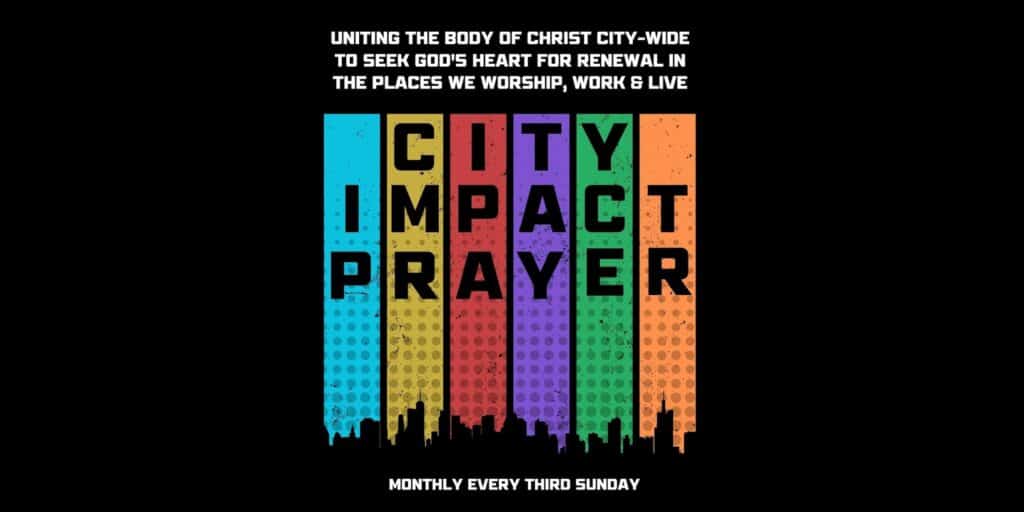
In Cleveland, OH, the local CCDA network has been striving imperfectly to find some kind of rhythm of stopping. Once a month, practitioners gather for a small and simple time for prayer and worship. Network leader, Dr. Vatreisha Nyemba, says, “There is a sacred and necessary space for stopping and having focused worship. City Impact Prayer has definitely become embedded into my sustainability in urban ministry. What I see in ministry sometimes feels overwhelming and disappointing, but God reminds me that it doesn’t belong on my shoulders.”
What are the bells in my life that tell me to stop from my labor and worship God? Do I have anything that interrupts my busy flow to bring me back to God in worship and prayer?
CCDA, is there a bell in your life to summon you out of your work and into the presence of God? And when our time with God has passed, we joyfully enter back into the work of justice and shalom-making.
Without a rhythm of worship and work, our work becomes a mirage of productivity. We think we cannot stop because there is so much to do, but “Unless the Lord builds the house, the laborers work in vain.” Psalm 127:1
Here is a simple process of discernment for your own rhythms of work and prayer.
1. Listen.
What is calling me to enter into God’s presence? It might be church bells, the wind in the trees, or a broken bottle on the street.
2. Stop.
What is hindering me from entering God’s presence? Am I worried and disturbed by my work? Do I have too much on my calendar? Am I simply unwilling to put something down?
3. Space.
What sacred space is needed for me to enter into God’s presence? Do I need to enter a church building? Do I need to be alone? Or do I need others around me? Do I need to sing? Kneel? Shout?
Through a monthly rhythm of prayer and worship each Third Sunday, practitioners in Cleveland, OH, have started to see the beauty of just getting in His presence in the midst of the work. We want to share this gift with others at the 2025 CCDA National Conference in Grand Rapids. Join us as we “ring the bell” for a time of “Soaking Prayer and Worship” and simply get in His presence.
“Come to me all you who are weary and heavy laden and I will give you rest.”
About Justin Ross
Justin Ross is the co-founder and Director of Discipleship for New City Cleveland. He and his wife, Leah, and their four kids have been living in the Buckeye-Woodhill neighborhood of Cleveland, OH, since 2017.